
For months, we have been showing clients what is actually happening to organic traffic. Google has now publicly stated what the data has already shown and what Kia Ora Digital has been preparing enterprise brands, SaaS companies, AI businesses, high-growth e-commerce stores and service providers for.
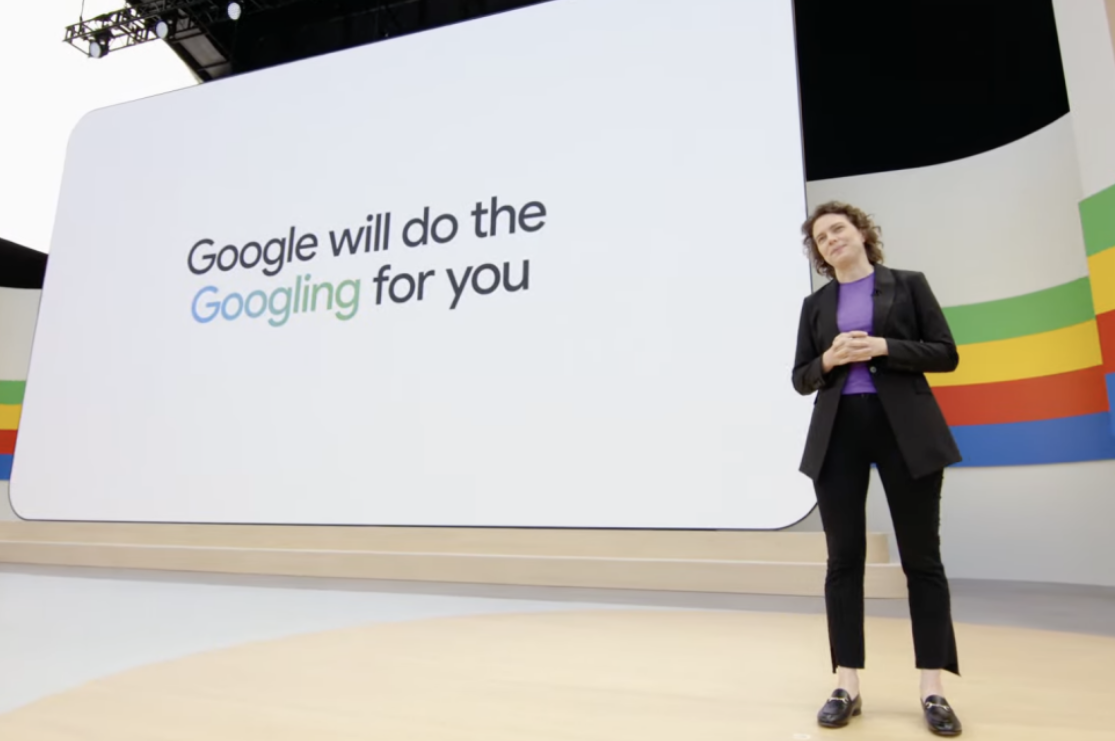
In a rare interview, Liz Reid, who leads Google Search globally, outlined the shifts influencing how people find information, brands and products. Her comments do not redirect our strategy. They simply validate the direction we have taken with clients over the past year.
This interview is part of the same pattern. The internet has changed. User behaviour has changed. AI Search is accelerating that change. Much of the SEO industry is still relying on outdated assumptions. Our role is to decode these shifts with clarity so our clients stay ahead of how search works today.
AI Is Not Killing Organic. Users Moved On.
Many SEOs still assume traffic fluctuations come from AI Overviews or algorithm volatility. The harder truth is that people now consume information differently. Attention has shifted toward short-form video, UGC, forums, podcasts, tutorials and community-based explanations. Reid listing these formats was not surprising. It aligned with the consumption curves we have shown clients across audits, strategy sprints and Blended Search roadmaps.
User attention did not disappear. It spread across more formats. The traditional SEO playbook tries to recover traffic from an older model instead of understanding how and where demand now appears.
The Shape of Traffic Changed. The Demand Did Not.
Reid noted that Google’s revenue has remained “relatively stable” despite AI Overviews. This supports a principle we have highlighted since their earliest tests. Distribution changes more than the underlying intent.
High intent searches still convert because purchasing behaviour has not changed. Informational searches rarely had ads in the first place. When users get answers faster, total search activity increases.
Google did not take traffic. Users simply move through queries more efficiently.
Google Now Ranks What Users Choose, Not What Publishers Prefer
Reid’s comments on ranking clarified a long-running trend. Google reflects user behaviour more directly than ever. When she said “we have to respond to who users want to hear from,” it showed that modern SEO is shaped by measurable user preference.
If people rely on forums for certain topics, those formats surface more often. If they prefer specialised operators or trusted brands for deeper expertise, those sources become more visible.
This is not about checklists. It is about evidence that people genuinely engage with.
This is why we guide clients to publish content built on real experience, domain expertise and operational insight rather than high-volume filler or generic guides.
Brands that provide clarity, context and credibility perform better across search experiences, including AI-driven results.
Inline AI Citations Are Becoming a Key Visibility Layer
One important shift is the rise of inline citations inside AI Overviews. Many in the SEO industry underestimate how meaningful these placements are.
Google is turning summaries into a recognition surface for trusted sources. Inline references such as “According to [Brand]” are becoming a discovery layer.
This is why we emphasise brand consistency, expertise, Digital PR and a recognisable presence across the web. If Google is going to cite a source in AI Search, it will demonstrate clarity, reliability and relevance in its category.
The Dead Internet Problem Is Pushing Google Toward Clear and Expert Content
Reid acknowledged the volume of generic AI-generated content online. This is not new information. The meaningful part is Google’s response. Google is elevating human perspective, original work, expert-led insight and intentional content.
These are the elements we build into every content sprint. This is why our clients maintain stability during updates while thin, interchangeable content declines.
AI Search Creates Opportunities for All Business Sizes, Including Enterprise
AI-driven queries allow Google to match users with sources that demonstrate specificity, context and clarity. This applies to enterprise companies, SaaS platforms, AI providers, service businesses and high-growth e-commerce brands.
Modern SEO is less about competing for the broadest keyword and more about being the most relevant answer for the user’s intent.
The New Playbook: What Drives Search Growth Now
Reid’s interview reinforces the strategic model we use across enterprise brands, SaaS companies, AI companies, high-growth e-commerce stores, and partner agencies.
Content grounded in expertise outperforms generic material.
Recognisable operators and credible brands outperform interchangeable sources.
Clear value beats volume.
AI Search visibility depends on authority signals, not the total number of keywords.
Blended Search, which connects Paid, Organic and AI-driven discovery, outperforms isolated SEO.
Our clients grow because users choose their content, not because they publish more of it.
That is the difference between pursuing traffic and pursuing revenue.
The Bottom Line
Google did not reduce organic opportunity. User behaviour evolved, and Google adapted to it. Businesses that recognise this shift gain larger opportunities, not smaller ones. AI Search amplifies strong brands across enterprise, SaaS, AI, services and e-commerce when their content reflects real expertise and clear value.
If you want this interpreted for your category, your competitors and your revenue model, we can map the exact AI Search and SEO strategy we use across enterprise and high-growth brands. Contact us and say: “Show me the plan.”